Showing posts with label It's Complicated. Show all posts

Friday, September 20, 2013

Is the Race Card Old School?

An It's Complicated! — Authentic Voices guest post by author, Mitali Perkins.

When my book Rickshaw Girl (Charlesbridge) came out, one reviewer said I was “drawing on my cultural roots” to tell the story.

I winced when I read that line.

I was writing about Naima, the Muslim daughter of an impoverished rickshaw puller in Bangladesh. My grandfather was a Hindu landowner who exploited people like Naima. The rift between me and my character was almost as wide as a daughter of a slave-owner writing about the daughter of a slave. Sure, we’re both Bengali, so we share a language and other cultural commonalities. But why is race the primary authenticity card when it comes to granting storytelling permission? What about power, gender, class?

The bottom line is that all fiction crosses borders. Age: middle-aged people write about children. Gender: women write about boys; men write about girls. Class: suburbanites write about inner-city kids.

If we don’t write an imagined life, we craft memoir.

Does that mean anybody can write anything when it comes to fiction? It must, with caveats. Because what an author learns before the age of seven does matter in fiction.

Thursday, September 19, 2013

"I Want to Write What I Know"

An It's Complicated! — Authentic Voices guest post by author, Bil Wright.

“Write what you know!” Isn’t that what English teachers, writing instructors and even guest authors encourage beginning writers to do? Many young writers, eager to begin to unravel the mystery of how to tell a story “successfully” hold onto this advice as a foundation for their writing careers whether it be professionally, academically or writing for their own enjoyment. Certainly this adage provides a certain comfort level; writing about what is familiar almost guarantees, if nothing else, a level of credibility and even authenticity, doesn’t it? And certainly, for any writer wanting to make a deep connection with his/her reader, authenticity is a quality that is highly desirable. So then does that mean I should stay away from writing about topics or characters, indeed people who are less familiar to me? Perhaps I should not include them in my computer created world, lest I fall short of making them totally believable to my reader. Perhaps I should compile a list so that I’m careful to avoid these topics and characters as I proceed to tell my stories.

Wednesday, September 18, 2013

Authentically Me

An It's Complicated! — Authentic Voices guest post by author, Sharon G. Flake.

Growing up I did not see the value in being my authentic self. I was skinny, long-legged, and shy with big rabbit teeth.  Some adults and kids even called me Olive Oyl (Popeye’s Girlfriend) —enough said?
 

I remember wanting to be like my neighbor Yolonda. She could wear a blanket and look red-carpet ready.  I on the other hand, could never quite make fashion work, even today.

By middle school comparing myself to others was a fine art.  There was the blond I sat next to who had the most exquisite handwriting. For years I tried to emulate it.  In high school there was Pam. She absorbed information like a sponge.  Earning high A’s with ease or so it seemed.  I would study until my brain froze, only to end up with a lack luster B or C.

Thank God for my freshmen college English class.  Before then, I do not recall feeling one-way or the other about writing. Yet somehow my professor lit a flame in me. No longer did I need to be a carbon copy of others, at least on paper.  My writing was opinionated, fearless, and political. I was determined to use my work to give voice to the powerless.  And because I loved the community I grew up in, I never hesitated to draw on its strengths, challenges and uniqueness.

Tuesday, September 17, 2013

First, Know Yourself

An It's Complicated! — Authentic Voices guest post by author, Diana López.

“Write about picking cotton,” my family said when they heard I wanted to be a writer. “Write about how we used the fabric from flour sacks to make our dresses, and how Grandma hates fish because that’s all she ate during the Depression, since it didn’t cost anything for them to go fishing for food.”

Closely examine my family, or any family, and you’ll discover all the drama of a telenovela. Naturally, I wanted to write about being chastised for speaking Spanish, about living on a ranch in San Diego, about my grandmother being “Rosita the Riveter” during World War II. I tried to write those stories. But my only experience working the land comes from fifteen minutes in a field off Old Robstown Road where my parents showed us how to pick cotton. It was interesting to feel the texture, so unlike a T-shirt, which is what I had imagined.
 
My grandmother might have hated fish, but I loved it. We had a boat that we’d take to Laguna Madre, where we’d compete to see who could catch the most, the biggest, or the strangest. (Once, my brother caught a seagull when it chomped on the bait as he cast.) Back home, Dad filleted the fish in the backyard, the cats begging and fighting over scraps. Then, Mom used cornmeal batter to fry the fish, and we ate, delicately picking meat off tiny bones.
 
All this to say that my family’s experiences and the emotions associated with them are not exactly mine.

Monday, September 16, 2013

It Doesn't Have to Be True to Be Truthful

An It's Complicated! — Authentic Voices guest post by author, Alex London.

Authenticity, that vicious guard-dog of truth, bedevils a teller of stories every step of the way. It is not enough to feel the truth of what you write or even to know it. The reader must feel you are right in the telling of it. An inauthentic voice can make even an honest memoir feel like a lie, while an authentic voice can make a whole pack of lies seem true. Just look to James Frey’s first book for proof of that.

In writing my YA debut, Proxy, I struggled with authenticity early on. As a gay man who was once a gay teen, I had no trouble with my protagonist’s sexuality. I well-remembered the unrequited longings, the suppressed desire for a kiss that sometimes broke out as rage, and the feeling, ever-present, that my sexuality did not define me and that I could not let the world tell me it did.

Syd, one of two main characters in Proxy, contains much of the truth of my own experience and the challenge there was the common challenge to all writing: to make sure I rendered him as vividly as I would want to be rendered myself. I had memories to draw on, fragmented conversations with my straight best-friend, felt truths that I could, with effort, put into words.

It's Complicated!: Authentic Voices Series Continues

One week down, one more week to go! 

Last week this It's Complicated! series highlighted authors who wrote brilliantly from outside of their perspectives including Graham Salisbury, Elizabeth Kiem, Walter Dean Myers, A.S. King, and Patricia McCormick. Some great takeaways?
A writer writes, and doesn’t really worry much about complaints, anyway. We’re seeking the dramatic and emotional intricacies of life wherever and however we can find them. Our job is to explore them, enlighten ourselves, and try our best to move our readers. We may all look different, but we are all intimately and infinitely connected. We are one. We are beings with parallel heartbeats. The only race out there is the human one.--Graham Salisbury, Parallel Heartbeats

My central characters all have some aspects of my personality. I don’t intend to write this way but it’s inevitable. I know I can use my personal view to create a character of depth, but I have to vary that character so that I’m not constantly writing the same book over and over again.--Walter Dean Myers, Character Development

My characters are me. I couldn’t write them if they weren’t. None of my characters are autobiographical, but every one of them is human and so am I. In the end, we all have too much in common to go on separating ourselves. We eat and we poop. We are born and we die. We struggle through. While diversity is a celebration of every type of human, I am most interested in that humanness that connects us.--A.S. King, What is Personal Perspective, Really?

Friday, September 13, 2013

Taking the Risk and Taking the Heat

An It's Complicated! — Authentic Voices guest post by author, Patricia McCormick.

When authors try to write about experiences far outside our own, we run a number of risks. We’ll be accused of getting it wrong, of slumming in someone else’s pain or,  worst of all, of being insensitive or patronizing. But for me, it’s only through trying on the experience of another human being that I’m able to recognize the limits of my imagination – and, more importantly, my unconscious biases.

For instance, in Sold, a novel based on my interviews with young Indian and Nepali women who were sold into prostitution, I chose to include a white American character. He is a photographer, based on the real-life activist who introduced me to the issue of human trafficking. It was a thank-you to that young man. But the inclusion of an American character was also a way to give my primary audience a character with whom they could identify.

Some readers criticized the book for repeating the myth of the noble white American rescuer in the land of savages.  And upon reflection, I have to plead guilty.  If I were to write the book over again, I’d probably base the ‘rescuer’ on the women in India and Nepal who are fighting trafficking. Or on the male police officers now doing that work.

Lesson learned.

Thursday, September 12, 2013

What Is Personal Perspective, Really?

An It's Complicated! — Authentic Voices guest post by author, A.S. King.

Writing outside of my “personal perspective” is easy because I am fascinated by human beings, and not particularly fascinated by myself.

And what is personal perspective? Is it the body I am in? This physical, sometimes smelly, sometimes sunburnt, sometimes arthritic shell? Is it the color of my skin? The house I grew up in? The amount in my parents’ bank account in 1984? Is it my family’s traditions during holidays? How often we went to church—or the fact that it wasn’t often? This question of personal perspective concerns me because it seems to be the thing a writer is supposed to transcend when he or she writes a novel. It’s also the thing a writer is supposed to plug into. It’s tricky like that.

When thinking about my characters and how they relate to me and more importantly, how they don’t relate to me, I find the dissimilar parts the least important. For example: I am not a young man. I never have been a young man. I am also not a child from a poor home, I’ve never lived in a trailer park, neither have I lived in a gated community of mini-mansions. So how do I write authentically from the point of view of a young man? How do I write authentically from the point of view of a poor girl who lives in a trailer park? A boy who lives in a mini-mansion?

Wednesday, September 11, 2013

Character Development

An It's Complicated! — Authentic Voices guest post by 2012-2013 National Ambassador for Young People's Literature, Walter Dean Myers.

What I knew about the character I wanted to create was that he was based on the Moroccan hero Tarik ibn Zayad. In late April, 711, Tarik led his soldiers across what is now known as the strait of Gibraltar onto the Iberian Peninsula. My problem was to keep the book as time specific as possible while making it interesting to today’s young reader.

Knowing the subsequent influence of Islamic and Moorish culture in Spain, I decided to take the trip to the areas I would be writing about. I took my usual research assistants – my wife Constance and our son Christopher. We flew from Newark Airport to Malaga where we spent a few days checking out the food and staring at the people. Christopher noted that many seemed to be of mixed race.   We then rented a car and drove to Granada.   

Granada is flat out beautiful, and I knew I wanted to include the lush scenery in my book. So throughout the book I made references to the vegetation and thus gave Tarik a careful and interesting appreciation of the wonders of nature.  

Tarik, in my story, is on a mission of vengeance. His family has been killed by Visigoth raiders and he is angry. But, needing to control that anger I gave him martial arts training from two people, one who teaches him to fight and the other who teaches him self control.  His character is coming along nicely, thank you. 

Tuesday, September 10, 2013

Write What You Know

An It's Complicated! — Authentic Voices guest post by author, Elizabeth Kiem.

Last month, as the release date of my Cold War thriller Dancer, Daughter, Traitor, Spy drew near, these were the things I worried about:
 
Would Russian readers question why I nicknamed Marina, my heroine, ‘Marya’ rather than the more usual ‘Marinka?’

Would American readers check Google earth and find that the building where Marya lives is not as close to the riverbank as I implied?

Would anybody notice that Marya flies out of Moscow on a Tupelov 134, which is actually an unmanned drone?

In other words I worried that readers might question the authenticity of my story, my setting, or my props. But it never occurred to me that I might be challenged on the authenticity of my character – a Russian ballerina with a psychic streak and a lot of family baggage.

Monday, September 9, 2013

Parallel Heartbeats

An It's Complicated! — Authentic Voices guest post by author, Graham Salisbury.

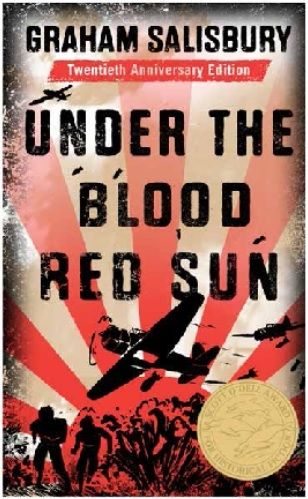
Original Cover
New Cover
My second novel, Under the Blood-Red Sun (1994), is about the power of friendship as seen through the eyes of two young boys in Honolulu when Pearl Harbor is bombed. One is Billy, a white boy, who’d moved to Hawaii from California, and the other is his best friend, Tomi , a Japanese boy born and raised in the islands. I wrote the first draft of this novel from Billy’s point of view, figuring, well gee, I’m a white guy … I had to write it from Billy’s point of view.

But that first draft wasn’t working; the editorial letter said, in effect, “This novel has no heartbeat. Try again.”   
 
Wow.

So … should I start over, or chuck the three hundred pages and move on to something else? That may sound like a tough decision, but it wasn’t, because I realized that my problem was really quite simple: I’d written the book from the wrong point of view. This was Tomi’s story, not Billy’s.


But could I, a Caucasian, write a novel in first person from the point of view of a young Japanese-American boy? I had an audience of young readers that would very likely believe that I actually was Tomi, and must be Japanese. If they were to ever actually see me they might feel betrayed! And what about reviewers and other adults? “The nerve!”

Friday, September 6, 2013

Take Four! A New, Two-part "It's Complicated" Conversation

As part of CBC Diversity's ongoing effort, we're pleased to present the fourth dialogue in the "It's Complicated!" blog series starting next week, and for the first time, it will run over two consecutive weeks, starting on Monday. This time we've invited five authors to share their thoughts about writing inside their cultural perspective, and five authors to discuss writing outside their cultural perspective.

I think most would agree that in an ideal world, the diversity depicted in books and of their creators would match the diversity of our world. But I know some might disagree on the best way to get there--what if that's not immediately possible? Is it better to have white/straight/able-bodied, etc. authors write books about non-white/LGBT/disabled, etc. characters? Can those characters truly be authentic? What if the only way authors of color can achieve commercial success is by writing books with non-diverse characters? And can those books be authentic, too? Are there any topics that should be "off-limits" to outsider writers? Do you trust an author you perceive to be an insider more than you would an outsider?

Friday, March 1, 2013

We Need Diverse "Diverse" Books

An It's Complicated! — Marketing & Sales guest post by the Assistant Editor of School Library Journal's Book Reviews, Shelley Diaz.


After gobbling up L. M. Montgomery’s Anne of Green Gables series, I remember asking my sixth grade teacher, “What would life in 1908 have been like for a girl like me?” She paused, turned red and finally admitted that she just didn’t know. The very next day, she had hours’ worth of research to share with me about the Louisiana Purchase and the Spanish-American War, but my 11-year-old heart had already internalized the rub.

People of color are an indelible part of American history, and the books that are created and marketed in schools and libraries have to reflect that. They shouldn’t just be pigeonholed to their respective “Heritage” Month, and forgotten about for the rest of the year, but displayed and celebrated with every topic covered in the curriculum. Gary Soto’s Too Many Tamales can be served alongside Mother’s Day favorite, Are You My Mother? Nikki Giovanni’s poetry collections can accompany J. Patrick Lewis and Shel Silverstein’s during April’s National Poetry month. And though some may posit that these titles don’t exist, there are countless examples of award-winning and well-written books featuring diverse characters for children. There are publishers’ backlists full of important and relevant treasures that can be re-issued, re-packaged, and re-touted to that end. Organizations like CBC Diversity, REFORMA, and all of ALA’s other ethnic associations would serve as great partners to further this endeavor. This should be a continuous conversation, an open dialogue in which all who care about kids participate.

Thursday, February 28, 2013

Cover Blind

An It's Complicated! — Marketing & Sales guest post by a former storyteller in Northern Ireland and the current Champaign Central High School Librarian, Corinne Hatcher.


Librarians anticipate information and literature needs instinctively. Four years ago, when I changed from being an elementary school librarian to a high school librarian, I had a steep learning curve to know the literature that would best suit the needs of my population. I was surprised by the ways teens are particular about what they read and rushed to anticipate what they would like to check out. It didn’t surprise me that the Nora Roberts and Danielle Steel paperbacks that I found on the shelves were outdated in a school that was largely free-and-reduced lunch and African-American. 

In my search for more appropriate literature, I became acutely aware of the lack of young adult literature available that echos my students’ lives. Because these students are not necessarily the population that buys books, it was hard to find voices in literature that celebrated them. The publishing world has come a long way in offering a variety of voices to fill out the American teen experience, but we still have a long way to go.

Wednesday, February 27, 2013

Building Your Reading Room

An It's Complicated! — Marketing & Sales guest post by Little, Brown Books for Young Readers School & Library Marketing Director, Victoria Stapleton.


You have no idea how many, MANY times I have tried to reduce my thoughts on this very large topic to 600 words. You have no idea how many, MANY times I have cried thinking I needed to write 600 WORDS. And all of this while trying to make sure they are the right 600 words. What I have left are some observations from ten years of trying to do this work and do it respectfully. Please forgive me in advance if I have not managed to identify the correct words.

I approach the issue of diversity from the perspective of someone raised as a religious minority in the United States. A religious minority with very strong views (some of which it continues to hold today) about those who do not fit its paradigm. So I have a bit of experience being both outside and inside a dominant power structure. If you prefer a less political analogy, I spent of a lot of my early years negotiating my path between competing worldviews with their own claims to priority and attention.

The book I go back to over and over again when wrestling with these issues is A Room of One’s Own by Virginia Woolf. The book opens with the author confronting the great, massive, mustachioed, history of British Learning. It continues as a consideration of the writer’s struggle to assert the right to a reading and writing identity that is uniquely her own. Reading this book in my early teens was revelatory, giving me the permission to choose my own reading identity and communities. I did not have to be bound by the lists my school gave me, or the interpretation of books my teacher endorsed. I could begin to build my own reading room.

Tuesday, February 26, 2013

It's Not That Complicated!

An It's Complicated! — Marketing & Sales guest post by two-time Emmy winning journalist, former writer of Bowllan’s Blog at School Library Journal, and current Coordinator of Media Resources and Research at the Hewitt School in New York City, Amy Bowllan.


We all know when you want proficiency in a foreign language, the best way for mastery is immersion – visit the country and live with the people, right? You are less likely to judge someone when you’ve walked in their shoes, read their books, and eaten their foods. This is why novelist Chimamanda Adichie in her TED Talk, The Danger of a Single Story , is a must see.

The single story creates stereotypes and the problem with stereotypes is not that they are untrue but that they are incomplete. They make one story become the only story. -- Chimamanda Adichie

Ironically, there are still teachers in this country who find it perfectly ok to ask a black child to act out a slave auction – the danger of a single story. There still are teachers who do not read books by authors of color because they feel those books do not coincide with their curriculum; again, the danger of a single story. Not too long ago, I hosted a forum at my school for librarians, publishers, and diversity directors. The guest speaker was a multiracial Canadian woman who basically got up and told her story. One of the librarians came to me afterwards and said, “Her presentation was geared more for kids.” My response? “If we are not willing to hear the stories of adults who are different from us, how will we be able to assess what is good for our young people.” You fill in the blanks.

Monday, February 25, 2013

Waiting for the Goods

An It's Complicated! — Marketing & Sales guest post by the Supervising Librarian for Children’s Services at the Oakland Public Library in CA, Nina Lindsay.


I have little patience for: “brown people on covers don’t sell books.” My library’s community is hungry for brown people on the covers of their books.

Picture a Saturday afternoon at a library in Oakland CA. An 11-year-old and parent come in together to choose some reading. The librarian tries to find out what the child’s interests are, and what the parent’s secret agenda is, and provide a selection to choose from with a few books that speak to each. Often, if the family is not white, the parent’s very good secret agenda is for their child to read a book with a protagonist like them. If you are the 11-year-old, and your selection ends up looking like this:


Or this:


What would you pick?

Take Three! A New "It's Complicated!" Conversation

Here we go again! As part of CBC Diversity's ongoing effort, we're pleased to present the third  dialogue in the "It's Complicated!" blog series starting later today, this time addressing the sales and marketing of multicultural books.

The following voices inside and outside the publishing industry will each contribute one blog post to the series over the week, addressing how to market multicultural books to teachers, librarians and, ultimately, kids. The guest bloggers will also be participating in the open dialogue in the comments section of the site:


  • Nina Lindsay, Supervising Librarian for Children’s Services at the Oakland Public Library in CA
  • Victoria Stapleton, Little, Brown Books for Young Readers School & Library Marketing Director
  • Shelley Diaz, Assistant Editor at School Library Journal's Book Reviews
  • Corinne Hatcher, Librarian/Media Specialist at Champaign Central High School
  • Amy Bowllan, Coordinator of Media Resources and Research at the Hewitt School in New York City

Our first "It's Complicated!" blog dialogue in May 2012 addressed a topic that has arisen frequently at the Diversity table — the concept of responsibility and authenticity when writing about diverse characters and how authors, editors, and agents can choose/write stories that reflect the diverse nature of our society.

Our second "It's Complicated!" blog dialogue in September 2012 addressed a topic that had been bubbling up for quite some time — book covers and the faces and aesthetic choices we see and/or do not see on the front of picture, middle grade, and YA books.

Review both conversations by clicking here and scrolling down!

As always, we urge everyone to participate in what we hope will be an informative and insightful conversation. We really appreciate hearing from you, our readers, through the comments section of the posts about the parts of the discussion that you feel are most important and want to talk further about.

Friday, September 7, 2012

Separate, Not Equal

An It's Complicated! — Book Covers guest post by author Coe Booth.


Coe Booth
Like most writers I’m always a little — okay, a lot! — nervous about what my book covers will look like. After spending so much time writing the books, the fact that the cover image is out of my control leads to a great deal of anxiety. However, I was pleasantly surprised and happy when I saw the cover of my first novel Tyrell.

I really thought the photo of a teenage boy looking out onto his neighborhood would attract the attention of the audience I had in mind when I was writing the book — teenagers, especially boys, who don’t usually find a book that speaks to them. And I’ve since heard from lots of teens who tell me that it was the cover that initially drew them to the book.

The thing I never imagined was that the cover (and the covers of my subsequent books) might create an automatic ghettoization of my work.

I can’t tell you how many libraries I’ve been to where my books are not even shelved in the mainstream YA section. They are relegated to the shelf labeled “Street Lit” where the books about black people live. The same is true in some bookstores where a black person on a book cover means it’s no longer YA; it’s “Urban Fiction”.

I’m here to tell you, when it comes to books, segregation is alive and well in America.

Thursday, September 6, 2012

Who Will Create the New Normal?

An It's Complicated! — Book Covers guest post by Elizabeth Bluemle, a children's book author, blogger for Publishers Weekly, and owner of The Flying Pig Bookstore in Shelburne, Vermont.


Elizabeth Bluemle
 For sixteen years, I’ve been a bookseller in small-town, semi-rural Vermont, in a region that is progressive but fairly homogenous. I spend a lot of time introducing people to new books I think they might love, and over the years, I’ve encountered the usual range of responses from white customers to books with brown faces on the covers. Many of these responses are positive; some are reluctant or downright resistant, and represent mistaken assumptions about these books, that they are limited in focus and applicable only to a narrow, nonwhite audience.

I’ve got a toolbox full of tactics I use with hesitant customers, from subtle to overt, depending on how the situation reads. By emphasizing plot and character, by getting them to “forget” about race, I can get the adult excited about the story. I say adult deliberately, because out of the thousands of kids I’ve recommended books to, only a handful have ever shown even an awareness of the race of the cover character, much less a resistance to difference.

But the resistance is not entirely the reader’s fault. The extreme lack of diversity in children’s books (if it were hunger, it would count as starvation) — both featuring people of color as main characters and books published by writers of color — has led readers to some justified perceptions. For a long time, brown faces on covers by and large signaled certain kinds of stories: slavery, Civil Rights, gritty urban plight, outsiderness. The problem wasn’t with the stories themselves, of course; these were powerful, enriching, worthy books. But they were funneling nonwhite experience into particular tubes, and if readers were in the mood for something else—adventure or fantasy or mysteries, say—they looked elsewhere. They had to; there were few other choices. And that is still largely the case, with a few noteworthy, marvelous exceptions.