Showing posts with label Guest Blogger. Show all posts

Thursday, October 17, 2013

Industry Q&A with author-illustrator Don Tate

When you were a child or young adult, what book first opened your eyes to the diversity of the world?

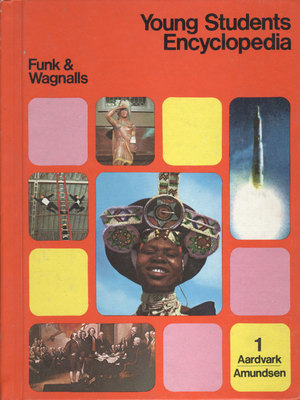
imageI didn’t read books as much as I should have. I struggled with comprehension and retention. There was plenty of Dr. Seus and Mother Goose around the house, but I preferred our Funk & Wagnalls Young Students Encyclopedias. That’s where I discovered a multicultural world.

As a child, I thought the world was white. That’s what my world looked like growing up in Des Moines, Iowa in the 1960s and 70s. White people, white books, white movies, white television, white music. Encyclopedias allowed me to see the world from another vantage point. They revealed a world made up of color -- brown people of every shade. Maybe that’s why encyclopedias appealed to me so much.


What is your favorite diverse book that you read recently?

I’m a little confused about the term ‘diverse book.’ It's one of those uncomfortable, elephant-in-the-room terms, that used to mean one thing, but has morphed into something entirely different. It’s an industry code word whose definition still evolves.

I’ve illustrated children’s books for nearly 30 years -- trade and educational. When I entered the business back in the 80s, people used the word ‘diversity’ interchangeably with Black or African-American. When someone said ‘diversity,’ I knew they were talking about me. I was often hired to illustrate a text because an editor had a ‘diverse,’ ‘multicultural,’ ‘African-American’ manuscript. However when I hear the term used today, it’s more inclusive, as should be. When someone says ‘diverse,’ they could mean African-American, Hispanic, Asian, Native, LGBT, girls/women, mixed-race, physically challenged, Buddhist -- or even white. A better question might be: What is a favorite book that exemplifies diversity? But even that would be a difficult question because I don’t think diversity can be about one or two books. It’s about a body of books: Heart & Soul; Diego Riveria; Dreaming Up!; Around our Way on Neighbor’s Day; Alvin Ho; Jingle Dancer. There’s so many.

Friday, September 20, 2013

Is the Race Card Old School?

An It's Complicated! — Authentic Voices guest post by author, Mitali Perkins.

When my book Rickshaw Girl (Charlesbridge) came out, one reviewer said I was “drawing on my cultural roots” to tell the story.

I winced when I read that line.

I was writing about Naima, the Muslim daughter of an impoverished rickshaw puller in Bangladesh. My grandfather was a Hindu landowner who exploited people like Naima. The rift between me and my character was almost as wide as a daughter of a slave-owner writing about the daughter of a slave. Sure, we’re both Bengali, so we share a language and other cultural commonalities. But why is race the primary authenticity card when it comes to granting storytelling permission? What about power, gender, class?

The bottom line is that all fiction crosses borders. Age: middle-aged people write about children. Gender: women write about boys; men write about girls. Class: suburbanites write about inner-city kids.

If we don’t write an imagined life, we craft memoir.

Does that mean anybody can write anything when it comes to fiction? It must, with caveats. Because what an author learns before the age of seven does matter in fiction.

Thursday, September 19, 2013

"I Want to Write What I Know"

An It's Complicated! — Authentic Voices guest post by author, Bil Wright.

“Write what you know!” Isn’t that what English teachers, writing instructors and even guest authors encourage beginning writers to do? Many young writers, eager to begin to unravel the mystery of how to tell a story “successfully” hold onto this advice as a foundation for their writing careers whether it be professionally, academically or writing for their own enjoyment. Certainly this adage provides a certain comfort level; writing about what is familiar almost guarantees, if nothing else, a level of credibility and even authenticity, doesn’t it? And certainly, for any writer wanting to make a deep connection with his/her reader, authenticity is a quality that is highly desirable. So then does that mean I should stay away from writing about topics or characters, indeed people who are less familiar to me? Perhaps I should not include them in my computer created world, lest I fall short of making them totally believable to my reader. Perhaps I should compile a list so that I’m careful to avoid these topics and characters as I proceed to tell my stories.

Wednesday, September 18, 2013

Authentically Me

An It's Complicated! — Authentic Voices guest post by author, Sharon G. Flake.

Growing up I did not see the value in being my authentic self. I was skinny, long-legged, and shy with big rabbit teeth.  Some adults and kids even called me Olive Oyl (Popeye’s Girlfriend) —enough said?
 

I remember wanting to be like my neighbor Yolonda. She could wear a blanket and look red-carpet ready.  I on the other hand, could never quite make fashion work, even today.

By middle school comparing myself to others was a fine art.  There was the blond I sat next to who had the most exquisite handwriting. For years I tried to emulate it.  In high school there was Pam. She absorbed information like a sponge.  Earning high A’s with ease or so it seemed.  I would study until my brain froze, only to end up with a lack luster B or C.

Thank God for my freshmen college English class.  Before then, I do not recall feeling one-way or the other about writing. Yet somehow my professor lit a flame in me. No longer did I need to be a carbon copy of others, at least on paper.  My writing was opinionated, fearless, and political. I was determined to use my work to give voice to the powerless.  And because I loved the community I grew up in, I never hesitated to draw on its strengths, challenges and uniqueness.

Tuesday, September 17, 2013

First, Know Yourself

An It's Complicated! — Authentic Voices guest post by author, Diana López.

“Write about picking cotton,” my family said when they heard I wanted to be a writer. “Write about how we used the fabric from flour sacks to make our dresses, and how Grandma hates fish because that’s all she ate during the Depression, since it didn’t cost anything for them to go fishing for food.”

Closely examine my family, or any family, and you’ll discover all the drama of a telenovela. Naturally, I wanted to write about being chastised for speaking Spanish, about living on a ranch in San Diego, about my grandmother being “Rosita the Riveter” during World War II. I tried to write those stories. But my only experience working the land comes from fifteen minutes in a field off Old Robstown Road where my parents showed us how to pick cotton. It was interesting to feel the texture, so unlike a T-shirt, which is what I had imagined.
 
My grandmother might have hated fish, but I loved it. We had a boat that we’d take to Laguna Madre, where we’d compete to see who could catch the most, the biggest, or the strangest. (Once, my brother caught a seagull when it chomped on the bait as he cast.) Back home, Dad filleted the fish in the backyard, the cats begging and fighting over scraps. Then, Mom used cornmeal batter to fry the fish, and we ate, delicately picking meat off tiny bones.
 
All this to say that my family’s experiences and the emotions associated with them are not exactly mine.

Monday, September 16, 2013

It Doesn't Have to Be True to Be Truthful

An It's Complicated! — Authentic Voices guest post by author, Alex London.

Authenticity, that vicious guard-dog of truth, bedevils a teller of stories every step of the way. It is not enough to feel the truth of what you write or even to know it. The reader must feel you are right in the telling of it. An inauthentic voice can make even an honest memoir feel like a lie, while an authentic voice can make a whole pack of lies seem true. Just look to James Frey’s first book for proof of that.

In writing my YA debut, Proxy, I struggled with authenticity early on. As a gay man who was once a gay teen, I had no trouble with my protagonist’s sexuality. I well-remembered the unrequited longings, the suppressed desire for a kiss that sometimes broke out as rage, and the feeling, ever-present, that my sexuality did not define me and that I could not let the world tell me it did.

Syd, one of two main characters in Proxy, contains much of the truth of my own experience and the challenge there was the common challenge to all writing: to make sure I rendered him as vividly as I would want to be rendered myself. I had memories to draw on, fragmented conversations with my straight best-friend, felt truths that I could, with effort, put into words.

Friday, September 13, 2013

Taking the Risk and Taking the Heat

An It's Complicated! — Authentic Voices guest post by author, Patricia McCormick.

When authors try to write about experiences far outside our own, we run a number of risks. We’ll be accused of getting it wrong, of slumming in someone else’s pain or,  worst of all, of being insensitive or patronizing. But for me, it’s only through trying on the experience of another human being that I’m able to recognize the limits of my imagination – and, more importantly, my unconscious biases.

For instance, in Sold, a novel based on my interviews with young Indian and Nepali women who were sold into prostitution, I chose to include a white American character. He is a photographer, based on the real-life activist who introduced me to the issue of human trafficking. It was a thank-you to that young man. But the inclusion of an American character was also a way to give my primary audience a character with whom they could identify.

Some readers criticized the book for repeating the myth of the noble white American rescuer in the land of savages.  And upon reflection, I have to plead guilty.  If I were to write the book over again, I’d probably base the ‘rescuer’ on the women in India and Nepal who are fighting trafficking. Or on the male police officers now doing that work.

Lesson learned.

Thursday, September 12, 2013

What Is Personal Perspective, Really?

An It's Complicated! — Authentic Voices guest post by author, A.S. King.

Writing outside of my “personal perspective” is easy because I am fascinated by human beings, and not particularly fascinated by myself.

And what is personal perspective? Is it the body I am in? This physical, sometimes smelly, sometimes sunburnt, sometimes arthritic shell? Is it the color of my skin? The house I grew up in? The amount in my parents’ bank account in 1984? Is it my family’s traditions during holidays? How often we went to church—or the fact that it wasn’t often? This question of personal perspective concerns me because it seems to be the thing a writer is supposed to transcend when he or she writes a novel. It’s also the thing a writer is supposed to plug into. It’s tricky like that.

When thinking about my characters and how they relate to me and more importantly, how they don’t relate to me, I find the dissimilar parts the least important. For example: I am not a young man. I never have been a young man. I am also not a child from a poor home, I’ve never lived in a trailer park, neither have I lived in a gated community of mini-mansions. So how do I write authentically from the point of view of a young man? How do I write authentically from the point of view of a poor girl who lives in a trailer park? A boy who lives in a mini-mansion?

Wednesday, September 11, 2013

Character Development

An It's Complicated! — Authentic Voices guest post by 2012-2013 National Ambassador for Young People's Literature, Walter Dean Myers.

What I knew about the character I wanted to create was that he was based on the Moroccan hero Tarik ibn Zayad. In late April, 711, Tarik led his soldiers across what is now known as the strait of Gibraltar onto the Iberian Peninsula. My problem was to keep the book as time specific as possible while making it interesting to today’s young reader.

Knowing the subsequent influence of Islamic and Moorish culture in Spain, I decided to take the trip to the areas I would be writing about. I took my usual research assistants – my wife Constance and our son Christopher. We flew from Newark Airport to Malaga where we spent a few days checking out the food and staring at the people. Christopher noted that many seemed to be of mixed race.   We then rented a car and drove to Granada.   

Granada is flat out beautiful, and I knew I wanted to include the lush scenery in my book. So throughout the book I made references to the vegetation and thus gave Tarik a careful and interesting appreciation of the wonders of nature.  

Tarik, in my story, is on a mission of vengeance. His family has been killed by Visigoth raiders and he is angry. But, needing to control that anger I gave him martial arts training from two people, one who teaches him to fight and the other who teaches him self control.  His character is coming along nicely, thank you. 

Tuesday, September 10, 2013

Write What You Know

An It's Complicated! — Authentic Voices guest post by author, Elizabeth Kiem.

Last month, as the release date of my Cold War thriller Dancer, Daughter, Traitor, Spy drew near, these were the things I worried about:
 
Would Russian readers question why I nicknamed Marina, my heroine, ‘Marya’ rather than the more usual ‘Marinka?’

Would American readers check Google earth and find that the building where Marya lives is not as close to the riverbank as I implied?

Would anybody notice that Marya flies out of Moscow on a Tupelov 134, which is actually an unmanned drone?

In other words I worried that readers might question the authenticity of my story, my setting, or my props. But it never occurred to me that I might be challenged on the authenticity of my character – a Russian ballerina with a psychic streak and a lot of family baggage.

Monday, September 9, 2013

Parallel Heartbeats

An It's Complicated! — Authentic Voices guest post by author, Graham Salisbury.

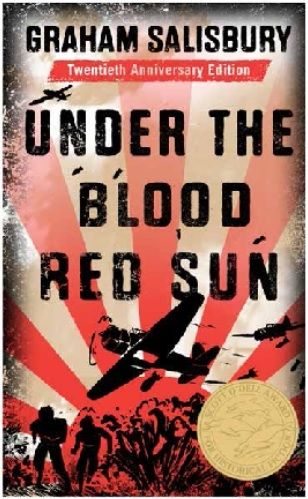
Original Cover
New Cover
My second novel, Under the Blood-Red Sun (1994), is about the power of friendship as seen through the eyes of two young boys in Honolulu when Pearl Harbor is bombed. One is Billy, a white boy, who’d moved to Hawaii from California, and the other is his best friend, Tomi , a Japanese boy born and raised in the islands. I wrote the first draft of this novel from Billy’s point of view, figuring, well gee, I’m a white guy … I had to write it from Billy’s point of view.

But that first draft wasn’t working; the editorial letter said, in effect, “This novel has no heartbeat. Try again.”   
 
Wow.

So … should I start over, or chuck the three hundred pages and move on to something else? That may sound like a tough decision, but it wasn’t, because I realized that my problem was really quite simple: I’d written the book from the wrong point of view. This was Tomi’s story, not Billy’s.


But could I, a Caucasian, write a novel in first person from the point of view of a young Japanese-American boy? I had an audience of young readers that would very likely believe that I actually was Tomi, and must be Japanese. If they were to ever actually see me they might feel betrayed! And what about reviewers and other adults? “The nerve!”

Tuesday, August 13, 2013

Finding Diversity and My Voice with a Flashlight and a Pen

Guest post by author Angela Cervantes


I am an original flashlight girl. You know the type. Hours after parents called for bedtime; I was still up under my bedcovers with a flashlight reading a favorite book. Many times, those books under the covers with me were the Chronicles of Narnia by C.S. Lewis, Little House on the Prairie by Laura Ingalls Wilder, and Beverly Cleary’s Ramona Quimby books. The fact that the heroines of these books were white and I was Mexican American didn't stop me from enjoying these books and rereading them several times. However, the more I fell in love with reading the more I questioned why there weren’t books like these with Latino characters. At the time, I remember thinking of all the girls in my neighborhood who were just as funny, spunky and adventurous as Ramona, Lucy and Laura. Surely there were books about them out there, right?

Not so much.

Tuesday, August 6, 2013

Industry Q&A with Robin Smith, children's book reviewer

When you were a child or young adult, what book first opened your eyes to the diversity of the world?


I think the first book I remember really opening my eyes was The Soul Brothers and Sister Lou. I have no idea how well it holds up over time.

What is your favorite diverse book that you recently read?

Since I am currently serving on a committee which looks at books from all over the globe, I have many books with diverse characters from all countries. I couldn't possible pick a "favorite," but a new book I think everyone should read is I Have the Right to Be a Child which is an illustrated book about UN Convention on the rights of the child. It is stunning.

If you could participate in a story time with any children’s book author or illustrator (alive or dead) who would it be?

I would love to have met and heard John Steptoe--I would love to hear him tell and talk about Mufaro's Beautiful Daughters, one of my favorite books of all time.

How do you introduce books featuring characters of color to parents and kids?

I really don't do anything different when I share books with characters of color to children, to tell you the truth.

Tuesday, June 25, 2013

Writing Sympathetic (Gay) Characters

Originally posted on the Diversity in YA blog by Brent Hartinger.

If you’re an author, how do make and keep your main character sympathetic?

You could write a whole book on this very topic — in fact, many have. I confess, I find it a fascinating one, mostly because it was exactly this idea of “likable” protagonists that made me start writing fiction in the first place.

Some writers reject the whole notion that main characters must be sympathetic (and to a degree, I would agree: jerks and anti-heroes absolutely have their place in the world, in certain kinds of stories).

But when I started writing back in the 80s and early 90s, I found myself completely frustrated by the main characters in so many books I was reading, especially the gay books. I was looking for characters I could relate to, and too many of the ones I was reading were way too whiny and self-destructive for my taste.

My partner and I used to joke that there was a name for the genre: *sshole fiction.

Monday, June 17, 2013

The World's A Stage, Or Is It?

Originally posted on the Diversity in YA blog by Sarah Rees Brennan.

The Demon’s Lexicon series is all about roles.

I started the first book, The Demon’s Lexicon, thinking about the role of Mr. Tall, Dark, Handsome and Morally Really Freaking Dodgy, and how we almost never get that guy’s point of view, and what he’d be like from the inside. Almost unforgivably awful, maybe, because you know how bad he is from the start, and you aren’t distracted by his good looks and dashing ways. What’s it like to look into the abyss? And what makes an abyss, anyway?

That was the role that started the ball, ahem, rolling. (Everybody groans and tosses rotten fruit.) From there I thought about roles, and the different ways I could play with them, like genderswitching: what if the hero of an epic fantasy — you know the type, rash and brave and honest and initially clueless — was a girl, what if the Mother Who Would Give Up/Do Anything For Her Kid was a boy?

Some of my ideas were just about going beyond a role, because some roles are true as far as they go, but people are so complex they never go far enough. Such as the gay guy who presents as weaker than other guys — what if he was physically weaker and smaller, and also quite deliberately presenting himself in a certain way, and also a huge magical badass?

Thursday, March 28, 2013

A Skin Not Your Own

Originally posted on the Diversity in YA blog by Laura Goode

I like to call my YA novel, Sister Mischief, the world’s first interracial gay hip-hop love story for teens. It’s hardly news to anyone reading this blog that young adult literature has historically suffered a dearth of queer protagonists and strong, whole characters of color. Including those identities in my novel was important to me, but as a white woman who’s in a committed relationship with a man, part of me wondered, am I entitled to borrow these skins?

While I was writing SM, I thought a lot about a phenomenon I’ve come to call the Good White Person Syndrome (GWPS). GWPS involves not just being a honky with positive values about race, but more sensitively, figuring out how to convey to others, especially people of color, that you are not a racist like Bad White People are. To be a GWP, you must banish the following phrases from your vocabulary:

“Some of my best friends are [insert non-white ethnicity here].”
“Can I touch your hair?”
“[Insert non-white ethnicity here] babies are SO ADORABLE.”
“No, but where are you FROM?”

Friday, March 15, 2013

Industry Q&A with author Bill Konigsberg

Tell us about your most recent book and how you came to write it.

My most recent novel is Openly Straight. It will be published by Arthur A. Levine Books (Scholastic) in June of 2013. I came to write it because I was exploring the coming out experience for LGBT folks like myself. I wondered why it is that gay people have to constantly label ourselves in a way that seems to overshadow every other aspect of our identities, and how unfair it is that we must continue to do this all our lives. I was interested in the idea that we are being dishonest if we choose to highlight a different label. I felt (and feel) that there are tons of books about the process and value of "coming out," but precious few about what happens after we do.

 Do you think of yourself as a diverse author?

As an author who believes there is great power in diversity of thought and experience, I am definitely a diverse author. In my first novel, Out of the Pocket, I wanted to make sure that my cast of characters reflected the diversity of our culture. In that novel, my main character is a gay Caucasian male. His best friend, Austin, is half Mexican and half Caucasian. His other best friend, Rahim, is African American. I do think that there is a tendency in young adult fiction to whitewash our culture, which may relate to the fact that a high percentage of YA authors are white. In each of my books, I make a point of showing racial, ethnic, and sexual diversity. I do this because I think it is so important for teens to see themselves reflected in literature.

Monday, March 11, 2013

Diversity 101: The Trappings of Difference

Writing About Emotional and Developmental Disabilities 

Contributed to CBC Diversity by Lyn Miller-Lachmann 

My Personal Connection
I am honored and grateful to be invited to contribute to the Diversity 101 blog, but as a person with Asperger’s syndrome (a mild form of autism) who can discuss at great length a topic of special interest, I find the blog’s word limit especially challenging. Hence, I will focus on what is one of my biggest issues among those who write about emotional and developmental disabilities such as Asperger’s—the exaggeration of difference at the expense of the feelings and desires we all have in common.

Stereotypes/Cliches/Tropes/Errors
In classic literature for young readers, physical and emotional disabilities often occurred side-by-side and were used to teach lessons on proper attitudes and behavior. For instance, in Frances Hodgson Burnett’s The Secret Garden, Mary Lennox’s self-centeredness is made visible through her sickly appearance, and the angry, depressed Colin Craven cannot rise from his wheelchair until he develops a positive attitude. Persons with disabilities appear in classic stories as fundamentally different, less capable of living a full life and contributing to society. It is no wonder that Colin is hidden away in a back bedroom of the hundred-room house; in those days, persons with disabilities were isolated and marginalized, hidden in the back rooms of their own houses or locked away in institutions.

Friday, March 8, 2013

Industry Q&A with author Matt de la Peña

Tell us about your most recent book and how you came to write it.

I just finished writing three new books (one YA, one middle grade and a picture book) that will come out in 2013.

The YA is called The Living. The two main characters (both half Mexican like me) are working on a luxury cruise ship for the summer. While they're at sea, the "big one" slams California. They have no idea if their border towns have survived. Or their families. And a more immediate concern is that the massive earthquake has unsettled the ocean, as well, endangering the ship. I grew up in southern California, constantly worried about earthquakes, and I'd always wanted to write about what might happen if one of my greatest fears was realized.

The middle grade novel I just finished is part of Scholastic's Infinity Ring series. It's called Curse of the Ancients. We were allowed to take our characters back to any part of history. I chose southern Mexico during the heyday of the Maya. It gave me a reason to research this amazing civilization.

The picture book is called Last Stop on Market Street (illustrated by Christian Robinson). It's about a boy and his grandma riding the bus from church to the soup kitchen where they volunteer on Sundays.

Friday, March 1, 2013

We Need Diverse "Diverse" Books

An It's Complicated! — Marketing & Sales guest post by the Assistant Editor of School Library Journal's Book Reviews, Shelley Diaz.


After gobbling up L. M. Montgomery’s Anne of Green Gables series, I remember asking my sixth grade teacher, “What would life in 1908 have been like for a girl like me?” She paused, turned red and finally admitted that she just didn’t know. The very next day, she had hours’ worth of research to share with me about the Louisiana Purchase and the Spanish-American War, but my 11-year-old heart had already internalized the rub.

People of color are an indelible part of American history, and the books that are created and marketed in schools and libraries have to reflect that. They shouldn’t just be pigeonholed to their respective “Heritage” Month, and forgotten about for the rest of the year, but displayed and celebrated with every topic covered in the curriculum. Gary Soto’s Too Many Tamales can be served alongside Mother’s Day favorite, Are You My Mother? Nikki Giovanni’s poetry collections can accompany J. Patrick Lewis and Shel Silverstein’s during April’s National Poetry month. And though some may posit that these titles don’t exist, there are countless examples of award-winning and well-written books featuring diverse characters for children. There are publishers’ backlists full of important and relevant treasures that can be re-issued, re-packaged, and re-touted to that end. Organizations like CBC Diversity, REFORMA, and all of ALA’s other ethnic associations would serve as great partners to further this endeavor. This should be a continuous conversation, an open dialogue in which all who care about kids participate.