Showing posts with label Industry Q and A. Show all posts

Thursday, October 17, 2013

Industry Q&A with author-illustrator Don Tate

When you were a child or young adult, what book first opened your eyes to the diversity of the world?

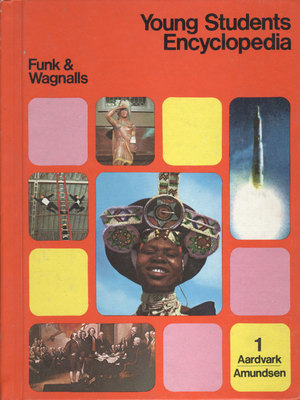
imageI didn’t read books as much as I should have. I struggled with comprehension and retention. There was plenty of Dr. Seus and Mother Goose around the house, but I preferred our Funk & Wagnalls Young Students Encyclopedias. That’s where I discovered a multicultural world.

As a child, I thought the world was white. That’s what my world looked like growing up in Des Moines, Iowa in the 1960s and 70s. White people, white books, white movies, white television, white music. Encyclopedias allowed me to see the world from another vantage point. They revealed a world made up of color -- brown people of every shade. Maybe that’s why encyclopedias appealed to me so much.


What is your favorite diverse book that you read recently?

I’m a little confused about the term ‘diverse book.’ It's one of those uncomfortable, elephant-in-the-room terms, that used to mean one thing, but has morphed into something entirely different. It’s an industry code word whose definition still evolves.

I’ve illustrated children’s books for nearly 30 years -- trade and educational. When I entered the business back in the 80s, people used the word ‘diversity’ interchangeably with Black or African-American. When someone said ‘diversity,’ I knew they were talking about me. I was often hired to illustrate a text because an editor had a ‘diverse,’ ‘multicultural,’ ‘African-American’ manuscript. However when I hear the term used today, it’s more inclusive, as should be. When someone says ‘diverse,’ they could mean African-American, Hispanic, Asian, Native, LGBT, girls/women, mixed-race, physically challenged, Buddhist -- or even white. A better question might be: What is a favorite book that exemplifies diversity? But even that would be a difficult question because I don’t think diversity can be about one or two books. It’s about a body of books: Heart & Soul; Diego Riveria; Dreaming Up!; Around our Way on Neighbor’s Day; Alvin Ho; Jingle Dancer. There’s so many.

Wednesday, August 21, 2013

Industry Q&A with editor Phoebe Yeh

Please tell us about the most recent diverse book you published. 
The School for Good and Evil
by Soman Chainani

For the purposes of this response, I propose that we define “diversity” in a more expansive way.

I suggest that “diversity” should mean more than issue based books by authors of color about protagonists of color. (While I believe that these books are still needed, the definition of diversity in the 21st century needs to be broader. I encourage all of you to read Christopher Myers’ excellent Horn Book piece for more on this subject.

Please consider the work of the debut novelists Korean American Ellen Oh and Asian Indian Soman Chainani. They are part of a growing number of authors of color who are breaking boundaries with regard to the diversity of book content and genre.

Tuesday, August 6, 2013

Industry Q&A with Robin Smith, children's book reviewer

When you were a child or young adult, what book first opened your eyes to the diversity of the world?


I think the first book I remember really opening my eyes was The Soul Brothers and Sister Lou. I have no idea how well it holds up over time.

What is your favorite diverse book that you recently read?

Since I am currently serving on a committee which looks at books from all over the globe, I have many books with diverse characters from all countries. I couldn't possible pick a "favorite," but a new book I think everyone should read is I Have the Right to Be a Child which is an illustrated book about UN Convention on the rights of the child. It is stunning.

If you could participate in a story time with any children’s book author or illustrator (alive or dead) who would it be?

I would love to have met and heard John Steptoe--I would love to hear him tell and talk about Mufaro's Beautiful Daughters, one of my favorite books of all time.

How do you introduce books featuring characters of color to parents and kids?

I really don't do anything different when I share books with characters of color to children, to tell you the truth.

Tuesday, April 2, 2013

Industry Q&A with editor Rosemary Brosnan

Interview by Caroline Sun

Please tell us about the most recent diverse book you published.
 
P.S. Be Eleven
by Rita Williams-Garcia
Rita Williams-Garcia’s P.S. Be Eleven  will be coming out in June. It’s the wonderful continuation of the story told in One Crazy Summer, and I love it! In this story, sisters Delphine, Vonetta, and Fern are back in Brooklyn after a summer spent with their mother in Oakland, CA. Delphine starts sixth grade, with all the perils that entails—a male teacher she can’t quite figure out, the sixth-grade dance, a growth spurt that leaves her taller than almost all the boys. And there’s the Jackson Five, this heavenly new group that is going to be playing in Madison Square Garden…  Although the book is set in the late 1960s, it’s has a very universal quality. And the setting never intrudes on the story—Rita is very careful about that. She is a master. We’ve worked together on all of her novels, and I’m proud to be her editor. Love Rita, love her books.

What’s the biggest challenge for publishing companies who want to feature more diverse titles?

Publishing diverse books has long been a passion of mine. I’ve been around long enough that I’ve seen the climate for publishing diverse titles get sunny, and then cloudy, and then sunny again, and so on. I’ve been involved in publishing Spanish-language and bilingual books at Penguin, and at Harper, through the Rayo imprint. The toughest problem is selling the books and reaching the market. I’ve heard a lot of publisher-bashing, which I feel is not entirely fair—and I suppose I’ll be criticized for saying so. In my experience, I’ve seen strong efforts to sell diverse books that are sometimes met with low sales—and I’m thinking of Spanish-language and bilingual books in particular. It’s likely that publishers don’t quite know how to reach the market. But perhaps people who want publishers to publish more diverse books should make a commitment to buy the books.  The problem does not lie only on the side of the publishers, although there is certainly more we can do.

Friday, March 15, 2013

Industry Q&A with author Bill Konigsberg

Tell us about your most recent book and how you came to write it.

My most recent novel is Openly Straight. It will be published by Arthur A. Levine Books (Scholastic) in June of 2013. I came to write it because I was exploring the coming out experience for LGBT folks like myself. I wondered why it is that gay people have to constantly label ourselves in a way that seems to overshadow every other aspect of our identities, and how unfair it is that we must continue to do this all our lives. I was interested in the idea that we are being dishonest if we choose to highlight a different label. I felt (and feel) that there are tons of books about the process and value of "coming out," but precious few about what happens after we do.

 Do you think of yourself as a diverse author?

As an author who believes there is great power in diversity of thought and experience, I am definitely a diverse author. In my first novel, Out of the Pocket, I wanted to make sure that my cast of characters reflected the diversity of our culture. In that novel, my main character is a gay Caucasian male. His best friend, Austin, is half Mexican and half Caucasian. His other best friend, Rahim, is African American. I do think that there is a tendency in young adult fiction to whitewash our culture, which may relate to the fact that a high percentage of YA authors are white. In each of my books, I make a point of showing racial, ethnic, and sexual diversity. I do this because I think it is so important for teens to see themselves reflected in literature.

Friday, March 8, 2013

Industry Q&A with author Matt de la Peña

Tell us about your most recent book and how you came to write it.

I just finished writing three new books (one YA, one middle grade and a picture book) that will come out in 2013.

The YA is called The Living. The two main characters (both half Mexican like me) are working on a luxury cruise ship for the summer. While they're at sea, the "big one" slams California. They have no idea if their border towns have survived. Or their families. And a more immediate concern is that the massive earthquake has unsettled the ocean, as well, endangering the ship. I grew up in southern California, constantly worried about earthquakes, and I'd always wanted to write about what might happen if one of my greatest fears was realized.

The middle grade novel I just finished is part of Scholastic's Infinity Ring series. It's called Curse of the Ancients. We were allowed to take our characters back to any part of history. I chose southern Mexico during the heyday of the Maya. It gave me a reason to research this amazing civilization.

The picture book is called Last Stop on Market Street (illustrated by Christian Robinson). It's about a boy and his grandma riding the bus from church to the soup kitchen where they volunteer on Sundays.

Wednesday, January 2, 2013

Industry Q&A with author Lisa Yee

Tell us about your most recent book and how you came to write it.

 
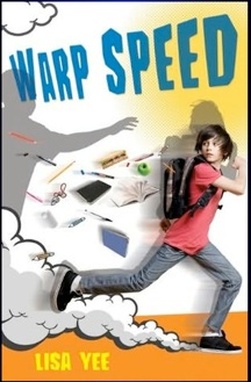
Warp Speed is about a Star Trek geek who is bullied every day. I wrote it because during an assembly a boy said, "I need to know what happens to Marley."

Marley was a minor character in Stanford Wong Flunks Big-Time who is bullied. Later, the boy's teacher told me that he had never spoken in class before -- that he was just like Marley.

I had no plans to write that book, but after a couple of years, I couldn't forget that boy, and I knew I needed to write Warp Speed.

Do you think of yourself as a diverse author?

No. I just think of myself as an author whose characters reflect what I see around me.

Wednesday, December 12, 2012

Industry Q&A with author Valerie Hobbs

Tell us about your most recent book and how you came to write it.

My most recent book is Minnie McClary Speaks Her Mind. Like most authors, I invest a lot of myself in my characters and I've had a lot to say apparently about things that aren't right, that should be right. About how people should be treated regardless of ethnicity, gender, class, disability, sexual orientation, etc., etc. And I believe that children should be encouraged to think, not just fill in bubbles on state-mandated standardized tests. Miss Marx, Minnie's teacher, is the kind of teacher I wish I had been when I taught middle-school years ago. She encourages the students to think, to question, and to write about the things that concern them. It takes courage, especially these days, to be the kind of teacher she is.

Do you think of yourself as a diverse author?

I hadn't, I suppose because as a white woman I'm not considered "diverse", but my beliefs certainly fall into that camp.

Thursday, November 29, 2012

Industry Q&A with author Tanita S. Davis

Tell us about your most recent book and how you came to write it. 

I read a newspaper account of Theresa Sparks, who was formerly a man. I was struck by what she had to say about love and family, and I wondered if my own family could have survived a transgender member intact. During this time, the hatemongers under the banner of the Westboro Baptist Church were up to some headline-grabbing stupidity, and I found myself wondering if people who claimed Christianity could ever love someone enough to accept them – thus Happy Families came out of a lot of quiet thoughts. It challenged me to explore my own hidden fears and beliefs and to make a personal resolve in favor of love.

Do you think of yourself as a diverse author?

Um... not really. In the mirror/window illustration made famous by Mitali Perkins☺, I consider myself a mirror – I'm turning my work around toward my community, and these are the people I see. I try to be inclusive of the sometimes invisible things – the differently abled or those with other challenges, multiracial blends, blended families, various faiths, etc. – because that's real-world stuff, and I really feel there's too much culture-less, colorless fiction being published.

Friday, October 26, 2012

Industry Q&A with author Shana Burg

Tell us about your most recent book and how you came to write it.

My second middle grade novel, Laugh with the Moon, was published in June, 2012 (Random House). It tells the story of a 13-year-old girl from Boston named Clare Silver who goes to Malawi, Africa for nine weeks, after the recent death of her mother. Though Clare is furious at her father for taking her away from her friends to live in the jungle, she soon discovered the reason behind her father’s motivation—it is healing to be among peers who, for better or worse, are expert at dealing with grief.

The novel is based on my own experience visiting Malawi, and I drew from the friendships I made with the people I met here.

Do you think of yourself as a diverse author?

I’d say yes and no. I’m an Ashkenazi Jew, so I look white. But growing up in Massachusetts, I always felt an outsider in a town where there were country clubs, but only token Jewish and black members were allowed to join.  I was born in Birmingham, Alabama, where my father was a civil rights lawyer and a partner in the first integrated law firm in the state since Reconstruction. So while I’m not a person of color, I probably identify with the struggles more than some other people.